It’s not just you– emotions are confusing. They are hard to describe in words, difficult to point at, and perhaps best (or worst) of of all, they feel a lot. Humor me for a second, think about anger–when was the last time you felt deeply angry? What did it feel like? Maybe sweaty palms, pulsing heart rate, blood rushing to your face, adrenaline coursing throu–wait wait, that sounds like you were just working out… Again, specifically, what was anger like? It may be so obvious to you, but it’s frustratingly difficult fully conveying how distinct and deeply true that moment felt to someone else.
Whatever they are, we viscerally feel emotions deep in our guts and bones. And that, frankly, is a bit uncomfortable; that these difficult to describe, hard to rationalize, arresting things we call “feelings” flow (and sometimes throttle) through us.
I’m going to walk you through the psychology of emotions. What are emotions? What do they do? While I’ll do my best to give some answers and helpful takeaways, you may leave with more questions than answers. But that in itself is very worth remembering: understanding emotions, for you and for people who literally spend their entire lives studying them, is hard. They may be complicated and confusing, but emotions are ultimately there to help us.
Ok, let’s go. Preamble over, head and the heart time.
The Great Debate: What is an Emotion?
To understand what an emotion is you need to understand the two factions that have been arguing about this exact topic for the better part of 50 years. Truthfully, this question about emotions goes back even further. I’ll start with the original and most pervasive major emotion theory: Basic Emotion Theory.
On One Hand…”Basic” Emotions
While perhaps stretching historical accuracy (Barrett, 2011), you’ll see a lot of psychologists cite Darwin as the origin for modern scientific emotion study (Colombetti, 2009; Hess & Thibault, 2009; Keltner et al., 2019; Ortony, 2022). Darwin observed this: have you ever found it strange that, if shown a picture of someone’s face you’ve never seen before, even if from a different culture or part of the world, you probably have a good guess if they’re, say, happy or sad? I.e., how and why does everyone seem to make and understand similar facial expressions to convey similar things?
This was taken as a sign of universally recognizable facial expressions (vestigial “serviceable habits” as Darwin put it; Darwin, 1872); the idea that somewhere in our shared, naturally selected human evolutionary history, we developed certain facial and bodily expressions to convey certain information to each other (Lench & Carpenter, 2018; Ortony, 2022). This idea spawned an entire psychological tradition focused on studying emotional facial behavior (e.g., Allport 1924; Tomkins, 1962; Ekman & Oster, 1979).
And turns out, they had a point. Show people various faces and ask them to identify what they are feeling and they tend to do a good job–whether it be in experiments (e.g. Horstmann, 2003) or doing it with folks in very remote cultures (e.g., Ekman & Friesen, 1971), this pattern turns up over and over again (e.g., Elfenbein & Ambady, 2002, Lench et al., 2011). This idea that there are core, biologically derived and universally recognizable emotions has coalesced into what is now referred to as basic emotion theory.
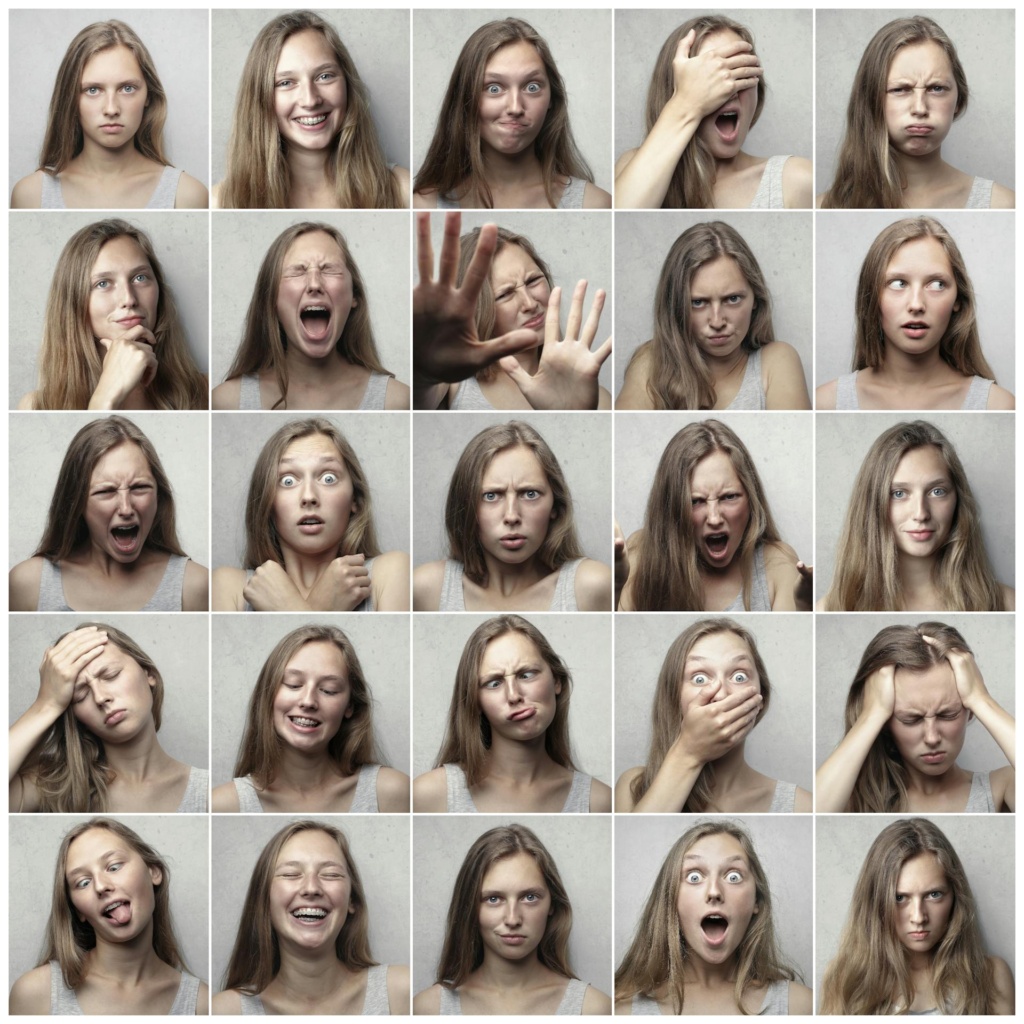
According to basic emotion theory, emotions are distinct, (often but not always) brief states of physiological, subjective, and expressive components that allow us to adapt to challenges in our environment (Keltner et al., 2019). Some emotions may be culturally dependent and learned and all that jazz, but the core idea is that some if not all emotions are baked into each and every one of us to some extent. Some emotions may be more fundamental than others, emotions that are core to everyone: these are “basic” emotions.
The exact list of basic emotions has changed quite a lot (Ortony & Turner, 1990), in part due to some shifting goalposts over time (Ekman, 1992; Ekman & Cordaro, 2011). For now, we generally agree on 6 basic emotions: anger, fear, sadness, enjoyment, disgust, and surprise (Ekman, 1992; Keltner et al., 2019). If this list looks awfully similar to what you see in the Inside Out movies, you’d be right–Professor Dacher Keltner, a well respected emotion researcher, consulted on the movies. This discrete, “basic” theory of emotion—where there are many distinct emotions surrounding a core few—has been the dominant theory of emotions over the past century.
And for good reason! It makes intuitive sense (uses language we’re familiar with–“that’s sadness” “that’s fear” etc.), it’s organized (each emotion is discrete; their own separate ‘box’ of feeling and expression and function), it’s scalable (starting from basic, you can theoretically accommodate more complex emotions like awe higher and higher up), and there’s nearly 100 years worth of psychology data behind it. Sounds good to me!
On the Other Hand…”Constructed” Emotions
The Basic Critique
But pump the brakes for a bit. Some psychologists over the last 30+ years have noticed some important limitations in this picture. Firstly, remember that shortlist of 6 basic emotions? While most agree on those 6, depending on who (and when) you ask, there are dozens of other disputed basic emotions: contempt, disgust, love, guilt, interest, shame, surprise, sorrow, anxiety, grief, wonder etc. (Ortony, 2022). In other words, how can you claim there are a few “basic” emotions if a) you can’t consistently agree on what counts as “basic” and b) the list keeps getting bigger and smaller all the time?

Secondly, there are some naming complexities here. For example, notice something peculiar with these emotions? They’re all in English. If an emotion is truly “basic” it must be universal–everyone, no matter if they understand English, must experience it. This gets super tricky beyond just literal translation issues. For example, Tahitians do not have a word for sadness (Levy, 1973). Tahitians likely experience some form of what English-speakers mean by “sadness”, but whatever that experience is it’s not salient enough for them to have put a word for it (Ortony, 2022).
This risks a heaping dose of ethnocentrism, whereby we (mostly English-wielding) psychologists might insist this foreign emotion label of “sadness” is more true of Tahitian emotional experience than their own words and expressions (Wierzbicka, 1999). Copy and paste this problem to any number of different language and culture translations and you start to see the issue.
Taking this notion further, some point out the term “emotion” is so variable across cultures, history, and language that it remains unclear what exactly an “emotion” actually refers to (Russell, 2021). For example, is an emotion the pattern of stuff happening in your body? The cause of that pattern? The subjective experience of that pattern and cause? Where exactly does the “emotion” part start and end? By this notion, it’s hard to say there are just a handful of basic, discrete emotions because we don’t even know what, where, or when to label them!
Thirdly, maybe this face recognition thing ain’t super reliable. Contextual information like cultural orientation, bodies, other faces, and words can drastically change perception of facial emotion expression (Barrett et al., 2011). For example, take this guy on the right –>


Do you think this expression is positive or negative? Depends on things beyond just his face, it’s the whole picture.
In other words, can we really put that much stock in judging facial expressions? Can we really separate each emotion into separate boxes? Are these labels like “sadness” too linguistically dependent to be helpful? Now what?
An Alternative: Constructed Theory of Emotion
What if instead of asking “Is [X] an emotion?” and “How many emotions are there?” we instead ask “what causes feelings and behavior?” That is a major distinction for a different theory of emotion called constructionism (Barrett, 2006).
Constructionism (technically, the constructed theory of emotion) offers a very different perspective on emotion than discrete, basic emotions. In this perspective, we think of emotions as constructed experiences rather than separate categories. Remember, basic emotion theory suggests emotions are discrete categories of feels/bodily reactions embedded in all of us; biology is the key. Instead, the constructionist idea of emotions says emotions are actually about the meaning we make of those biological markers (i.e. how we interpret sweaty hands or racing heartbeat in a given context; Barrett, 2006). Context and culture are thus crucial because they provide the overarching umbrella of words and knowledge we use to construct said meaning (Barrett, 2012; Russell, 1991). In other words, emotions are not biologically “privileged” (Barrett et al., 2009; Ortony & Turner, 1990); biological in that it’s our bodies sensing/reaction to stuff, but the specific thing we experience as “emotion” is socially constructed (Barrett, 2012).
That may sound pretty straightforward– ’emotion is all about the meaning we make of our feelings and bodies, not some box/category inherently coded in us’–but gets kinda complicated when taken to its logical extreme. In constructionism, because emotions are all interpretation–we’re describing what emotional experiences are like and do, rather than what an emotion itself actually is–emotion is actually about studying the brain.
The brain is continuously taking in stimuli, making meaning of that stimuli, and directing us to do things in response to said stimuli (Barrett, 2017). To truly describe the guts of “emotion”, we need to look at how the brain handles that stimuli. By contrast, “anger” or “sadness” aren’t anywhere in the brain so we can’t properly study them. In fact, some constructionists say that anger and sadness are just “folk concepts” (Barrett, 2012), real and important but not something you can scientifically study (Barrett, 2021). What we can study are things like appraisals (e.g., what do you notice?), affect (feel good or bad?), and the underlying brain systems responsible (Barrett, 2017b). In other words, a constructionist perspective of emotion doesn’t care about discrete categories like “anger” or “sadness”, but instead focuses on simpler features like affect (“did it feel good or bad”) and arousal (“you hyped up or calmed down?”: Barrett, 2017a; Russell & Barrett, 1999).
Yeah, got kinda far out there huh?
New Emotion Ideas
Psychologists are still arguing about this split–emotions as discrete categories like anger, fear, sadness versus emotions as socially constructed things requiring neurological understanding–and probably will for some time. Both have good points and both have their limitations. However, there are some new ideas that if not bridge the two at least shake up the old guard.
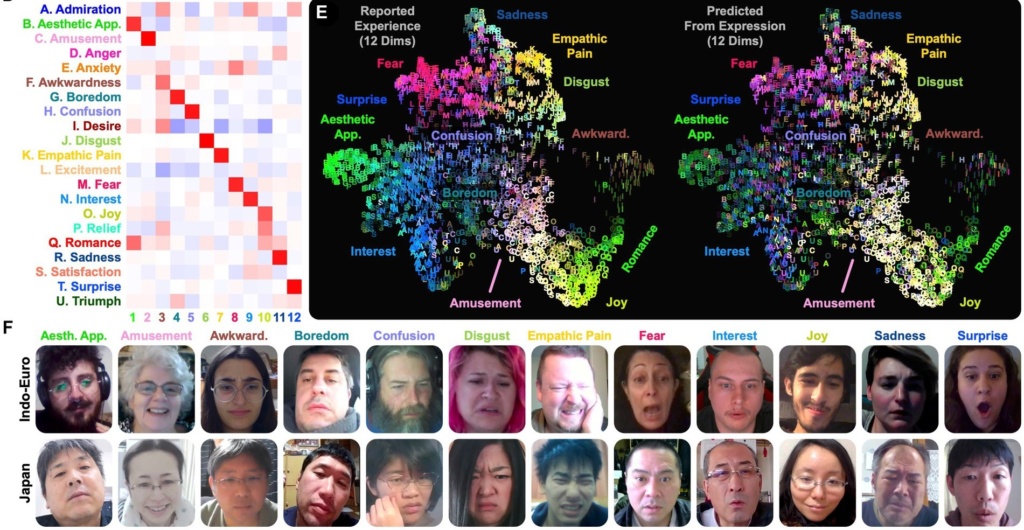
New quantitatively advanced techniques have relied on fancy analyses like semantic spatial clusters (Cowen & Keltner, 2021), which support and reject parts of both theories. For example, new work (Cowen & Keltner, 2020, 2021; Keltner et al., 2023) suggests emotions have highly overlapping boundaries (contrary to original basic emotion theory) but are too complex to be summarized by such simple measures as valence and arousal (contrary to constructionism). The most cutting edge, newest emotion research right now is starting to think about 12-18 universal emotions (Cowen et al., 2024; Cowen & Keltner, 2021).
After alllllll that, is there anything we can take away?
If I have convinced you of anything by now, hopefully it’s that even defining an emotion is hard and contentious (Izard, 2007; Mulligan & Scherer, 2012; Scarantino, 2012). After all that back and forth, you may very well be thinking, “Hey Ian, I dutifully read your whole history lesson and am more confused than ever you big show-off. Is there any common ground to hang our hats on?” To that I can only say, “well…fair.” Knowing all those points of emotion contention, here are some major points psychologists generally agree on.
- Generally…
- …emotions involve intention and valence (Clark et al., 2017; Lench & Carpenter, 2018; Ortony, 2022; Ortony & Russell, 2023).
- Intention: an emotion is about something
- This can be kinda tricky! Note this means anxiety is an emotion only to the extent it’s about something. Generalized anxiety–anxiety about nothing specifically– is not an “emotion” really, but more a mood state.
- Valence: it feels positive or negative
- For example, I may be indifferent about who wins the World Series (the Mariners never make it that far!). It is no emotional consequence to me; no emotion here.
- BUT I can feel emotion about indifference–e.g., I may feel pleased I don’t care about the World Series (“The gym will be so much emptier this weekend!”)–now we’re talking emotion again.
- Intention: an emotion is about something
- …emotions interact with culture
- Culture is the lens by which we know what, and how, to notice and care (or not) in the stuff around us (Russell, 2014).
- …emotions are evolved
- Our emotions have been naturally selected for. They have functionality, they improve (especially social) fitness and help us solve challenges (Bradley & Lang, 2002; Keltner & Gross, 1999; Levenson, 1999).
- …emotions involve intention and valence (Clark et al., 2017; Lench & Carpenter, 2018; Ortony, 2022; Ortony & Russell, 2023).
What Do Emotions Do?
It’s worth lingering on that last point–emotions have evolved to help us. And by “us” I mean not just you reading this, but all of us. Over the last decade or so, psychologists have leaned into the idea that emotions are really about social survival and social challenges (Fischer et al., 2016; Keltner et al., 2019; Parkinson & Manstead, 2015). Yes, fear will save you and your ancestors from tigers, but the bulk of our emotional lives are with, for, and about other people.
Because of this “directing attention” thing emotions do, emotions take on two predominant social functions: affiliation and distancing (Fischer et al., 2016). Affiliation is all about forming and maintaining relationships. Distancing is all about establishing (and maintaining) social positions and self-esteem. Essentially, one helps us get (and stay) close to each other, while the other is about staying (socially) safe.

As a result, emotions coordinate social life (van Kleef & Côté, 2022). We know emotions are neurally tied to our perception and reasoning (Phelps, 2006; Phelps et al., 2006); essentially, emotions help direct our attention. As such, emotions provide us social information (about ourselves and others) which we then use in our social decision-making (van Kleef, 2016; Van Kleef et al., 2010). In other words, “emoting” and interpreting others’ emotions is the crux of this dynamic, flow-y, improvised dance we call socializing!
Some emotions seem to do this ‘social thing’ more than others. For example, positive emotions (e.g. joy, interest) are particularly affiliative (Fischer et al., 2003) because positive emotions make us more attentive and energized to find, and participate in, social opportunities (Fredrickson, 2001; Fredrickson & Branigan, 2005).

Another kind of emotion, self-transcendent emotions (e.g., awe, compassion, kama muta–“feeling moved or touched”) are a bit unique. Self-transcendent emotions are characterized by reduced self-salience and an elevated sense of connection to others and things outside the self (Pizarro et al., 2021; Yaden et al., 2017). It’s basically in the name, they’re emotions that concern and connect with the “big-ness” of things beyond me, myself, and I. Because of this, self-transcendent emotions are really good at bonding us with others (van Kleef & Lelieveld, 2022). Some even think these emotions are foundational to making us a social species (Stellar et al., 2017).
They aren’t always positive though; awe is the quintessential example. Awe is characterized by feeling small amidst some vastness–contemplating the size of the universe, the miracle of holding a newborn for the first time, etc. While it feels generally feels positive, it can also feel negative (Gordon et al., 2017; Nakayama et al., 2020). Consider this, feeling the amazing scale of the stars can also make you feel insignificant or scared too.
Another important self-transcendent emotion is kama muta, the feeling English-speakers often label as feeling emotionally “moved” or “touched.” When first identifying it, psychologists name it using Sanskrit –a dead language–to avoid those translation issues I mentioned earlier (here everyone is on the exact same page). Kama muta is characterized by warm fuzzy feelings, a lump in your throat, weepy eyes, a tightness in your chest among others. It basically makes you feel the need to hug someone. We feel it when we come to grips with how important close relationships really are (Fiske et al., 2017). Think of that last emotional wedding you went to or the last time you saw the end of Toy Story 3; that kind of choked-up feel. Kama muta is essentially the emotion of human connection–we feel it when we encounter deep human connection and it spurs us to make or deepen our own connections. (If you’re curious, I actually wrote my PhD on kama muta!) Take a look at this video if you want to get an idea of what kama muta is about:
There’s a whole other area of psychology research that augments everything we’ve talked about thus far called emotion regulation that I will drop down here if you’re interested (it can get reaaaaally complicated reaaaaaally quickly). Emotion regulation is all about what you do with emotions when you’re experiencing them. How you feel about your feelings, and what you do (or attempt to do) with your feelings can drastically affect what emotions do. (Believe me yet that emotion regulation is complicated?)
Conclusion
Emotions are complicated and you have every right to feel a bit iffy/uncomfortable about them. (We haven’t even discussed talking about our emotions–that’s an entirely new level of vulnerability). Psychologists have been wrestling with this stuff too for nigh on 100 years and we’re still learning and re-learning things all the time. But we are pretty confident about some things, and they can be helpful guide posts for how to live your emotional life.
Emotions are here to help us navigate ourselves and the world around us; they are the language the deepest parts of ourselves use to give us clues about what’s going on, both inside AND out. Emotions are how we interpret and find what matters in the world (Dukes et al., 2021). So next time you really feel an emotion, ask yourself: what is this emotion responding to, what does it specifically feel like? What is it doing to you? And perhaps most importantly, what is it doing for you?
References
- Allport, F. (1924). Social Psychology. Houghton Mifflin.
- Barrett, L. F. (2006). Are Emotions Natural Kinds? Perspectives on Psychological Science, 1, 28-58.
- Barrett, L. F. (2012). Emotions are real. Emotion, 12(3), 413-429. https://doi.org/10.1037/a0027555
- Barrett, L. F. (2017). Categories and Their Role in the Science of Emotion. Psychol Inq, 28(1), 20-26. https://doi.org/10.1080/1047840X.2017.1261581
- Barrett, L. F. (2017). The theory of constructed emotion: an active inference account of interoception and categorization. Soc Cogn Affect Neurosci, 12(1), 1-23. https://doi.org/10.1093/scan/nsw154
- Barrett, L. F., Gendron, M., & Huang, Y.-M. (2009). Do discrete emotions exist? Philosophical Psychology, 22(4), 427-437. https://doi.org/10.1080/09515080903153634
- Barrett, L. F., Mesquita, B., & Gendron, M. (2011). Context in Emotion Perception. Current Directions in Psychological Science, 20(5), 286-290. https://doi.org/10.1177/0963721411422522
- Barrett, L. F., & Westlin, C. (2021). Navigating the science of emotion. In Emotion Measurement (pp. 39-84). https://doi.org/10.1016/b978-0-12-821124-3.00002-8
- Barthel, A. L., Hay, A., Doan, S. N., & Hofmann, S. G. (2018). Interpersonal Emotion Regulation: A Review of Social and Developmental Components. Behaviour Change, 35(4), 203-216. https://doi.org/10.1017/bec.2018.19
- Bradley, M. M., & Lang, P. J. (2002). Measuring Emotion: Behavior, Feeling, and Physiology. In R. D. Lane & L. Nadel (Eds.), Cognitive Neuroscience of Emotion (pp. 242-276). Oxford University Press.
- Butler, E. A. (2011). Temporal interpersonal emotion systems: the “TIES” that form relationships. Pers Soc Psychol Rev, 15(4), 367-393. https://doi.org/10.1177/1088868311411164
- Butler, E. A., & Randall, A. K. (2012). Emotional Coregulation in Close Relationships. Emotion Review, 5(2), 202-210. https://doi.org/10.1177/1754073912451630
- Clark, M. S., Armentano, L. A., Boothby, E. J., & Hirsch, J. L. (2017). Communal relational context (or lack thereof) shapes emotional lives. Curr Opin Psychol, 17, 176-183. https://doi.org/10.1016/j.copsyc.2017.07.023
- Coan, J. A., & Sbarra, D. A. (2015). Social Baseline Theory: The Social Regulation of Risk and Effort. Curr Opin Psychol, 1, 87-91. https://doi.org/10.1016/j.copsyc.2014.12.021
- Colombetti, G. (2009). From affect programs to dynamical discrete emotions. Philosophical Psychology, 22(4), 407-425. https://doi.org/10.1080/09515080903153600
- Cowen, A. S., Brooks, J. A., Prasad, G., Tanaka, M., Kamitani, Y., Kirilyuk, V., Somandepalli, K., Jou, B., Schroff, F., Adam, H., Sauter, D., Fang, X., Manokara, K., Tzirakis, P., Oh, M., & Keltner, D. (2024). How emotion is experienced and expressed in multiple cultures: a large-scale experiment across North America, Europe, and Japan. Front Psychol, 15, 1350631. https://doi.org/10.3389/fpsyg.2024.1350631
- Cowen, A. S., & Keltner, D. (2020). What the face displays: Mapping 28 emotions conveyed by naturalistic expression. Am Psychol, 75(3), 349-364. https://doi.org/10.1037/amp0000488
- Cowen, A. S., & Keltner, D. (2021). Semantic Space Theory: A Computational Approach to Emotion. Trends Cogn Sci, 25(2), 124-136. https://doi.org/10.1016/j.tics.2020.11.004
- Darwin, C. R. (1872). The expressions of the emotions in man and animals. John Murray.
- Dukes, D., Abrams, K., Adolphs, R., Ahmed, M. E., Beatty, A., Berridge, K. C., Broomhall, S., Brosch, T., Campos, J. J., Clay, Z., Clement, F., Cunningham, W. A., Damasio, A., Damasio, H., D’Arms, J., Davidson, J. W., de Gelder, B., Deonna, J., de Sousa, R., . . . Sander, D. (2021). The rise of affectivism. Nat Hum Behav, 5(7), 816-820. https://doi.org/10.1038/s41562-021-01130-8
- Ekman, P. (1992). An argument for basic emotions. Cognition and Emotion, 6(3-4), 169-200. https://doi.org/10.1080/02699939208411068
- Ekman, P., & Cordaro, D. (2011). What is Meant by Calling Emotions Basic. Emotion Review, 3(4), 364-370. https://doi.org/10.1177/1754073911410740
- Ekman, P., & Friesen, W. V. (1971). Constants Across Cultures in the Face and Emotion. Journal of Personality and Social Psychology, 17(2), 124-129.
- Ekman, P., & Oster, H. (1979). Facial Expressions of Emotion. Annual Review of Psychology, 30, 527-554.
- Elfenbein, H. A., & Ambady, N. (2002). On the universality and cultural specificity of emotion recognition: a meta-analysis. Psychol Bull, 128(2), 203-235. https://doi.org/10.1037/0033-2909.128.2.203
- Fischer, A. H., Manstead, A. S. R., & Haviland-Jones, J. (2016). Social Functions of Emotion and Emotion Regulation. In M. Lewins, J. Haviland-Jones, & L. F. Barrett (Eds.), Handbook of Emotions (4 ed.). Guilford.
- Fischer, A. H., Manstead, A. S. R., & Zaalberg, R. (2003). Social influences on the emotion process. European Review of Social Psychology, 14(1), 171-201. https://doi.org/10.1080/10463280340000054
- Fiske, A. P., Seibt, B., & Schubert, T. W. (2019). The Sudden Devotion Emotion: Kama Muta and the Cultural Practices Whose Function Is to Evoke It. Emotion Review, 11(1), 74-86. https://doi.org/10.1177/1754073917723167
- Fredrickson, B. L. (2001). The Role of Positive Emotions in Positive Psychology: The Broaden-and-Build Theory of Positive Emotions. American Psychologist, 56(3), 218-226. https://doi.org/10.1O37//0OO3-O66X.56.3.218
- Fredrickson, B. L., & Branigan, C. (2005). Positive emotions broaden the scope of attention and thought-action repertoires. Cogn Emot, 19(3), 313-332. https://doi.org/10.1080/02699930441000238
- Gordon, A. M., Stellar, J. E., Anderson, C. L., McNeil, G. D., Loew, D., & Keltner, D. (2017). The dark side of the sublime: Distinguishing a threat-based variant of awe. J Pers Soc Psychol, 113(2), 310-328. https://doi.org/10.1037/pspp0000120
- Gross, J. J. (1998). Antecedent- and Response-Focused Emotion Regulation: Divergent Consequences for Experience, Expression, and Physiology. Journal of Personality and Social Psychology, 74, 224-237.
- Gross, J. J. (2015). Emotion Regulation: Current Status and Future Prospects. Psychological Inquiry, 26(1), 1-26. https://doi.org/10.1080/1047840x.2014.940781
- Gross, J. J. (2015). The Extended Process Model of Emotion Regulation: Elaborations, Applications, and Future Directions. Psychological Inquiry, 26(1), 130-137. https://doi.org/10.1080/1047840x.2015.989751
- Hess, U., & Thibault, P. (2009). Darwin and emotion expression. Am Psychol, 64(2), 120-128. https://doi.org/10.1037/a0013386
- Hofmann, S. G. (2014). Interpersonal Emotion Regulation Model of Mood and Anxiety Disorders. Cognit Ther Res, 38(5), 483-492. https://doi.org/10.1007/s10608-014-9620-1
- Horstmann, G. (2003). What do facial expressions convey: feeling states, behavioral intentions, or action requests? Emotion, 3(2), 150-166. https://doi.org/10.1037/1528-3542.3.2.150
- Izard, C. E. (2007). Basic Emotions, Natural Kinds, Emotion Schemas, and a New Paradigm. Perspectives on Psychological Science, 2, 260-280.
- Kelley, H. H., & Thibaut, J. W. (1978). Interpersonal Relations. Wiley.
- Keltner, D., Brooks, J. A., & Cowen, A. (2023). Semantic Space Theory: Data-Driven Insights Into Basic Emotions. Current Directions in Psychological Science, 32(3), 242-249. https://doi.org/10.1177/09637214221150511
- Keltner, D., & Gross, J. J. (1999). Functional Accounts of Emotions. Cognition and Emotion, 13(5), 467-480.
- Keltner, D., Sauter, D., Tracy, J., & Cowen, A. (2019). Emotional Expression: Advances in Basic Emotion Theory. J Nonverbal Behav, 43(2), 133-160. https://doi.org/10.1007/s10919-019-00293-3
- Kenny, D. A. (1996). Models of Non-Independence in Dyadic Research. Journal of Social and Personal Relationships, 13(2), 279-294.
- Lench, H. C., & Carpenter, Z. K. (2018). What Do Emotions Do for Us? In The Function of Emotions (pp. 1-7). https://doi.org/10.1007/978-3-319-77619-4_1
- Lench, H. C., Flores, S. A., & Bench, S. W. (2011). Discrete emotions predict changes in cognition, judgment, experience, behavior, and physiology: a meta-analysis of experimental emotion elicitations. Psychol Bull, 137(5), 834-855. https://doi.org/10.1037/a0024244
- Levenson, R. W. (1999). The Intrapersonal Functions of Emotion. Cognition & Emotion, 13(5), 481-504. https://doi.org/10.1080/026999399379159
- Levy, R. I. (1973). Tahitians: Mind and experience in the Society Islands. University of Chicago Press.
- Mauss, I. B., & Tamir, M. (2013). Emotion Goals: How Their Content, Structure, and Operation Shape Emotion Regulation. In J. J. Gross (Ed.), Handbook of emotion regulation (2 ed.). Guildford Publications.
- Mulligan, K., & Scherer, K. R. (2012). Toward a Working Definition of Emotion. Emotion Review, 4(4), 345-357. https://doi.org/10.1177/1754073912445818
- Nakayama, M., Nozaki, Y., Taylor, P. M., Keltner, D., & Uchida, Y. (2020). Individual and Cultural Differences in Predispositions to Feel Positive and Negative Aspects of Awe. Journal of Cross-Cultural Psychology, 51(10), 771-793. https://doi.org/10.1177/0022022120959821
- Naragon-Gainey, K., McMahon, T. P., & Chacko, T. P. (2017). The structure of common emotion regulation strategies: A meta-analytic examination. Psychol Bull, 143(4), 384-427. https://doi.org/10.1037/bul0000093
- Ortony, A. (2022). Are All “Basic Emotions” Emotions? A Problem for the (Basic) Emotions Construct. Perspect Psychol Sci, 17(1), 41-61. https://doi.org/10.1177/1745691620985415
- Ortony, A., & Russell, J. A. (2023). On the Invalidity of Neta and Kim’s Argument That Surprise is Always Valenced. Emotion Review, 16(1), 64-67. https://doi.org/10.1177/17540739231214785
- Ortony, A., & Turner, T. J. (1990). What’s Basic About Basic Emotions? Psychological Review, 97(3), 315-331.
- Parkinson, B., & Manstead, A. S. R. (2015). Current Emotion Research in Social Psychology: Thinking About Emotions and Other People. Emotion Review, 7(4), 371-380. https://doi.org/10.1177/1754073915590624
- Phelps, E. A. (2006). Emotion and cognition: insights from studies of the human amygdala. Annu Rev Psychol, 57, 27-53. https://doi.org/10.1146/annurev.psych.56.091103.070234
- Phelps, E. A., Ling, S., & Carrasco, M. (2006). Emotion Facilitates Perception and Potentiates the Perceptual Benefits of Attention. Psychological Science, 17(4), 292-299.
- Pizarro, J. J., Basabe, N., Fernandez, I., Carrera, P., Apodaca, P., Man Ging, C. I., Cusi, O., & Paez, D. (2021). Self-Transcendent Emotions and Their Social Effects: Awe, Elevation and Kama Muta Promote a Human Identification and Motivations to Help Others. Front Psychol, 12, 709859. https://doi.org/10.3389/fpsyg.2021.709859
- Rusbult, C. E., & Van Lange, P. A. (2003). Interdependence, interaction, and relationships. Annu Rev Psychol, 54, 351-375. https://doi.org/10.1146/annurev.psych.54.101601.145059
- Russell, D. W., & Barrett, L. F. (1999). Core Affect, Prototypical Emotional Episodes, and Other Things Called Emotion: Dissecting the Elephant. Journal of Personality and Social Psychology, 76(5), 805-819.
- Russell, J. A. (1991). Culture and the Categorization of Emotions. Psychological Bulletin, 110, 426-450.
- Russell, J. A. (2014). Four Perspectives on the Psychology of Emotion: An Introduction. Emotion Review, 6(4), 291-291. https://doi.org/10.1177/1754073914534558
- Russell, J. A. (2021). Psychological construction of episodes called emotions. Hist Psychol, 24(2), 116-120. https://doi.org/10.1037/hop0000169
- Scarantino, A. (2012). How to Define Emotions Scientifically. Emotion Review, 4(4), 358-368. https://doi.org/10.1177/1754073912445810
- Stellar, J. E., Gordon, A. M., Piff, P. K., Cordaro, D., Anderson, C. L., Bai, Y., Maruskin, L. A., & Keltner, D. (2017). Self-Transcendent Emotions and Their Social Functions: Compassion, Gratitude, and Awe Bind Us to Others Through Prosociality. Emotion Review, 9(3), 200-207. https://doi.org/10.1177/1754073916684557
- Tomkins, S. S. (1962). Affect, Imagery, Consciousness: Vol. 1. The positive affects. Henry Holt.
- van Kleef, G. A. (2016). The Interpersonal Dynamics of Emotion: Toward an Integrative Theory of Emotions as Social Information. Cambridge University Press.
- van Kleef, G. A., & Côté, S. (2022). The Social Effects of Emotions. Annu Rev Psychol, 73, 629-658. https://doi.org/10.1146/annurev-psych-020821-010855
- Van Kleef, G. A., De Dreu, C. K. W., & Manstead, A. S. R. (2010). An Interpersonal Approach to Emotion in Social Decision Making. In (pp. 45-96). https://doi.org/10.1016/s0065-2601(10)42002-x
- van Kleef, G. A., & Lelieveld, G. J. (2022). Moving the self and others to do good: The emotional underpinnings of prosocial behavior. Curr Opin Psychol, 44, 80-88. https://doi.org/10.1016/j.copsyc.2021.08.029
- Wierzbicka, A. (1999). Emotions across languages and cultures: Diversity and universals. Cambridge University Press.
- Yaden, D. B., Haidt, J., Hood, R. W., Vago, D. R., & Newberg, A. B. (2017). The Varieties of Self-Transcendent Experience. Review of General Psychology, 21(2), 143-160. https://doi.org/10.1037/gpr0000102
- Zaki, J., & Williams, W. C. (2013). Interpersonal emotion regulation. Emotion, 13(5), 803-810. https://doi.org/10.1037/a0033839